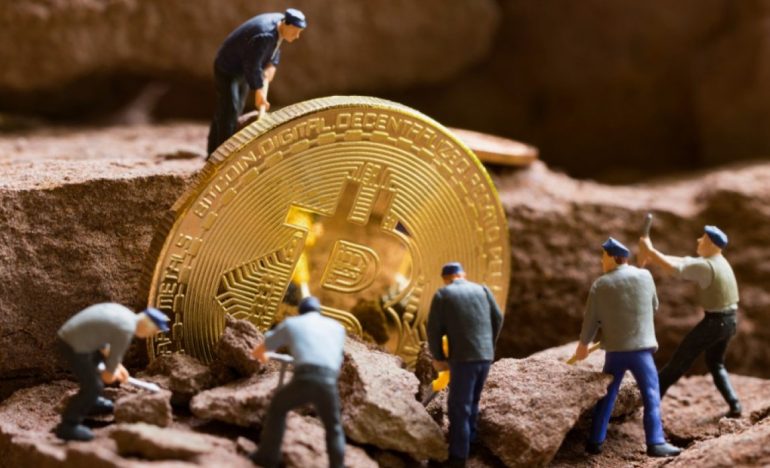
If you are looking to start mining Dogecoin in 2026, you have probably noticed that most advice online is either outdated or simply wrong. Many newcomers believe they can just turn on a home computer and start earning Dogecoin. In reality, the world of digital currency extraction has changed dramatically. Today, successful Dogecoin mining requires specific hardware, the right strategy, and most importantly, a deep understanding of how merged mining works. This guide will walk you through every step, from choosing your equipment to selecting the best Dogecoin mining pool for your needs. We will explain why going solo is a fast way to lose money and how you can maximize your daily rewards by combining the power of Litecoin and Dogecoin. Whether you are a seasoned miner or just buying your first Scrypt device, you will find practical, no-nonsense advice here. Our goal is to help you make an informed decision, avoid common traps, and start seeing real results from your mining efforts.
Why You Can’t (and Shouldn’t) Solo Mine Dogecoin
When people first hear about Dogecoin mining, many imagine running software on their laptop and watching coins appear in their wallet. Unfortunately, that picture is far from reality. Solo mining Dogecoin today is like buying a single lottery ticket and expecting to win the jackpot every day. The network power behind Dogecoin is enormous. Thousands of powerful machines, called Scrypt ASICs, are constantly working to solve complex math problems. Each time one of these machines finds a solution, the network rewards it with a block of Dogecoin. As a solo miner, you are competing against giant farms that have thousands of these devices running around the clock. Your chance of solving a block alone is extremely small, sometimes taking years or even decades.
Let us break down the numbers so you can see the reality. The total hashing power of the Dogecoin network is measured in terahashes per second. A modern home Scrypt ASIC might produce a few hundred megahashes. That sounds impressive, but in reality, your share of the network is less than a drop in the ocean. Even if you run your device for a full month without stopping, the probability of finding a single block remains near zero. And here is the painful part: if you never find a block, you earn absolutely nothing. Your electricity bill keeps coming, your hardware wears out, but your wallet stays empty. That is why experienced miners avoid solo Dogecoin mining. It is not a strategy; it is a gamble with terrible odds.
Another hidden problem with solo mining is the volatility of rewards. Even if you get incredibly lucky and find a block, the reward might be smaller than you expect. Dogecoin block rewards change over time, and transaction fees vary. You could wait a year, finally solve a block, and end up with an amount that barely covers your electricity costs. On the other hand, mining pools offer a completely different approach. Instead of racing alone, you join thousands of other miners who combine their power. Together, you find blocks more often, and the rewards are split fairly among all participants based on the work they contributed. This turns mining from a lottery into a steady paycheck. You might earn smaller amounts each day, but you earn something every single day. That predictability is crucial for anyone who treats mining as a serious activity rather than a hobby.
We also need to talk about the hardware required. Many beginners ask if they can mine Dogecoin with a regular computer or a graphics card. The short answer is no. Dogecoin uses the Scrypt algorithm, which was designed to be resistant to the type of mining that graphics cards excel at. Over the years, dedicated Scrypt ASIC miners have become so powerful that any other method is simply not profitable. If you try to use a CPU or GPU, you will spend more on electricity than you could ever earn in Dogecoin. So before you even think about solo mining, you would need to invest in specialized equipment. And then, as we explained, even with that equipment, going solo is a losing battle. The only sensible path is to join a pool and combine your hashing power with others. That way, your equipment works for you every minute of every day, producing a steady stream of rewards instead of an endless wait for a miracle.
The Power of Merged Mining: LTC + DOGE
Now that you understand why solo Dogecoin mining is a dead end, let us talk about the smart way to earn Dogecoin. This method is called merged mining, and it is a game changer for anyone serious about Scrypt-based digital currencies. Merged mining allows you to mine two different digital currencies at the same time without any extra work or additional computing power. How does this magic happen? It is based on a clever technical design. Both Litecoin and Dogecoin use the same Scrypt algorithm. This means that when your ASIC miner solves a complex math problem, that solution is valid for both networks simultaneously. A special technology called Auxiliary Proof of Work allows your miner to submit the same result to both the Litecoin network and the Dogecoin network. If your pool finds a block on Litecoin, it automatically also claims the Dogecoin block that is attached to it.
This is incredibly powerful because you are effectively getting paid twice for the same amount of work. Your electricity bill does not double. Your hardware does not work harder. You simply configure your miner to connect to a pool that supports merged mining, and the pool handles the rest. Every time the pool finds a Litecoin block, you earn a share of the Litecoin reward. And at that exact same moment, you also earn a share of the Dogecoin reward from the merged block. Over time, these Dogecoin earnings can add up significantly. In fact, many miners find that the Dogecoin portion of their merged mining income covers a large part of their electricity costs, making the whole operation much more profitable than mining Litecoin alone.
To really appreciate merged mining, you need to look at the Litecoin mining landscape. Litecoin has a strong, established network with consistent block rewards. When you join a Litecoin mining pool, you are participating in a mature ecosystem with predictable payouts. But by choosing a pool that also supports merged mining for Dogecoin, you instantly add a second income stream. Think of it this way: you are driving to work anyway, so why not pick up a passenger who pays you for the same trip? That is exactly what merged mining does. Your Scrypt ASIC is already running, already solving problems, already consuming electricity. Merged mining adds Dogecoin rewards on top of your Litecoin earnings with zero additional cost. It is pure efficiency.
Another advantage of merged mining is that it helps secure both networks. When miners use merged mining, the combined hashing power protecting Litecoin also protects Dogecoin. This makes Dogecoin much more resistant to attacks than it would be if it relied only on dedicated Dogecoin miners. For you as a miner, this means you are contributing to the health of two digital currencies while earning from both. It is a win-win situation. The only requirement is that you choose a pool that has implemented the necessary technology. Fortunately, most major Scrypt pools today support merged mining for Dogecoin. In the next sections, we will show you the best options available in 2026, comparing their fees, payout methods, and reliability. Whether you are looking for a pool with low fees, fast payouts, or a user-friendly interface, there is a perfect match waiting for you.
Best Dogecoin Mining Pools Via Scrypt
Choosing the right Dogecoin mining pool is one of the most important decisions you will make as a miner. The pool you select determines your fees, how often you get paid, and how reliable your income will be. With merged mining, you also need to ensure that the pool properly handles both Litecoin and Dogecoin rewards. Some pools claim to support merged mining but have technical issues that cause missed Dogecoin blocks. Others have high fees that eat into your profits. In this section, we have hand-picked the best pools for 2026 based on real-world performance, user feedback, and our own testing. Each pool offers something unique, so read carefully to find the one that fits your needs.
ViaBTC Pool for DOGE
ViaBTC has built a strong reputation as one of the most reliable and feature-rich mining pools in the world. When it comes to Scrypt merged mining, ViaBTC stands out for several reasons. First, their fee structure is transparent and competitive. You can choose between different payout models depending on how much risk you want to take. The most popular option for Dogecoin miners is the PPS+ model, which guarantees a stable payout for every share you submit. This means you do not have to worry about variance or luck. Every unit of work you contribute earns a predictable amount of Litecoin and Dogecoin. For miners who want steady daily income, this is a huge advantage.
ViaBTC also offers a user-friendly dashboard where you can monitor your hashrate, earnings, and payout history in real time. The pool supports automatic conversion of coins if you prefer to be paid in a single digital currency. For example, you can have your Litecoin and Dogecoin earnings automatically exchanged into Bitcoin or USDT. This is convenient if you want to simplify your accounting or avoid managing multiple wallets. Another strong point of ViaBTC is their global server network. No matter where you are located in the United States, you can connect to a nearby server to minimize latency. Lower latency means fewer rejected shares and higher effective earnings. ViaBTC also provides detailed setup guides for popular Scrypt ASIC miners, making it easy for beginners to get started.
When it comes to merged mining, ViaBTC has perfected the process. Their system automatically claims Dogecoin blocks attached to Litecoin blocks, and you receive your share of both rewards in each payout cycle. You do not need to configure anything special. Simply point your miner to ViaBTC’s Scrypt stratum address, add your wallet information, and start mining. The pool also supports a mobile app, so you can check your mining status from anywhere. For miners who value stability, low fees, and a proven track record, ViaBTC is an excellent choice. You can learn more and compare their features on our Dogecoin mining pool ranking page, where we list real-time statistics and user reviews.
EMCD Mining Pool for DOGE
EMCD is a newer player in the mining pool space, but they have quickly gained popularity among Scrypt miners for their innovative approach and low fees. EMCD focuses on providing maximum transparency and fair reward distribution. Their fee for merged mining is among the lowest in the industry, which means more Dogecoin stays in your pocket. EMCD uses a unique reward system called FPPS, which stands for Full Pay Per Share. This system not only pays you for each share you submit but also includes transaction fees from the blocks that the pool finds. As a result, your earnings are often higher than with traditional PPS pools.
One feature that sets EMCD apart is their integrated wallet and exchange. When you mine Dogecoin and Litecoin through EMCD, you can hold your earnings in their secure wallet or trade them instantly on their built-in exchange. This saves you the trouble of transferring coins to an external exchange and paying withdrawal fees. EMCD also offers a referral program that allows you to earn additional Dogecoin by inviting other miners to join the pool. If you have friends who are also mining Scrypt coins, this can be a nice bonus on top of your regular rewards.
EMCD places a strong emphasis on customer support. They have a dedicated team available 24/7 through live chat and email. If you ever encounter issues with your miner configuration or have questions about merged mining payouts, help is just a click away. The pool also provides detailed statistics and graphs so you can see exactly how much Dogecoin you are earning from merged mining versus your base Litecoin rewards. For miners who want to optimize every aspect of their operation, EMCD offers advanced features like custom payout thresholds and multiple worker management. Whether you are running one ASIC or a hundred, EMCD scales with your needs.
F2Pool for Dogecoin
F2Pool is one of the oldest and most trusted names in the mining industry. They have supported merged mining for Dogecoin and Litecoin for many years, making them a safe choice for miners who value reliability. F2Pool operates a massive global infrastructure that ensures high uptime and low orphan rates. When you mine with F2Pool, you can be confident that your shares are being counted correctly and that you will receive your Dogecoin rewards on time. Their fee structure is straightforward, and they offer multiple payout methods including automatic payouts to your wallet once you reach a minimum threshold.
One advantage of F2Pool is their extensive documentation and community support. Because they have been around for so long, you will find countless tutorials, forum posts, and videos showing exactly how to set up your Scrypt ASIC for merged mining on F2Pool. If you run into trouble, chances are someone has already solved the same problem and posted a solution. F2Pool also provides a mobile app and email alerts so you can monitor your mining operation even when you are away from your computer. For miners who want a set-it-and-forget-it experience, F2Pool delivers.
F2Pool also supports a wide range of other digital currencies, so if you ever decide to mine something other than Dogecoin or Litecoin, you can easily switch without creating a new account. Their dashboard shows your earnings in real time, and you can download detailed reports for tax purposes. Many miners appreciate F2Pool’s long history of stability. In an industry where new pools come and go, F2Pool has proven that they can weather any storm. If you are looking for a Dogecoin mining pool that will be around for years to come, F2Pool is an excellent choice.
How to Join a Doge Mining Pool
Joining a Dogecoin mining pool is simpler than most people think. You do not need to be a technical expert or understand the complex details of how merged mining works. The process involves just a few steps, and most pools provide clear instructions to guide you. In this section, we will walk you through the entire process from start to finish. By the end, you will have your Scrypt ASIC miner up and running, earning both Litecoin and Dogecoin through merged mining.
Configuring Your Scrypt ASIC
The first step is to unbox your Scrypt ASIC miner and connect it to power and your home network. Most modern ASIC miners have an ethernet port for internet connectivity. Plug the ethernet cable into your router and power on the device. After a minute or two, the miner will obtain an IP address from your router. You need to find this IP address to access the miner’s configuration page. The easiest way is to log into your router’s admin interface and look for connected devices. Alternatively, you can use a network scanning tool or check the miner’s display screen if it has one.
Once you have the IP address, type it into your web browser’s address bar. This will open the miner’s configuration dashboard. You will be asked for a username and password. Most miners use “root” or “admin” as the default username and “root” or admin as the default password. Check your miner’s manual if those do not work. After logging in, look for a section called “Pool Configuration” or “Mining Settings.” This is where you will enter the details of the Dogecoin mining pool you chose from our recommendations above.
Every pool provides a stratum address and a port number. For merged mining, you will use the pool’s Scrypt stratum address. For example, if you chose ViaBTC, you would enter something like stratum+tcp://scrypt.ViaBTC.com:3333. You also need to enter your worker name and password. Most pools let you create a worker name in your account dashboard. The worker name is usually your username followed by an underscore and a number, like “JohnMiner_1”. The password can be anything you want, but many pools just use “123” or “x” as a placeholder.
After entering the pool information, save your settings and restart the miner. The miner will now attempt to connect to the pool. You can check the miner’s status page to see if it is hashing correctly. Look for an “Accepted” count that increases over time. If you see shares being accepted, congratulations, your miner is working. If you see rejected shares or connection errors, double-check the stratum address and port number. Also make sure your firewall is not blocking the connection. Some home routers have security settings that can interfere with mining traffic.
Once your miner is connected and submitting shares, you can log into your pool’s dashboard using your account. In the dashboard, you will see your hashrate, the number of shares you have submitted, and your estimated earnings. Because of merged mining, you will see both Litecoin and Dogecoin earnings accumulating. The Dogecoin earnings might appear as a separate line item or as part of a merged total, depending on how the pool displays data. Over time, as the pool finds blocks, your pending balance will grow. When it reaches the pool’s minimum payout threshold, the pool will automatically send your earnings to the wallet address you provided during account setup.