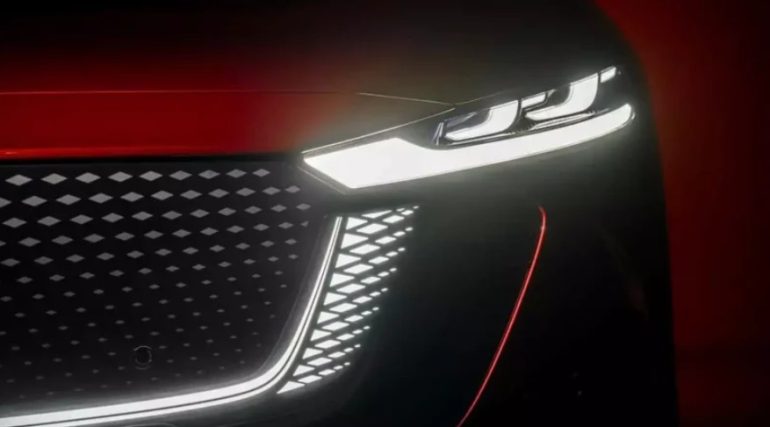
The electric Mazda 6e is preparing for an important technical update. For the 2027 model year, the Japanese manufacturer has revised the powertrain and battery setup, effectively combining the advantages of the two versions previously offered. The main innovation is a 78 kWh lithium iron phosphate battery, which increases the EV’s driving range to up to 560 km under the WLTP cycle.
The Mazda 6e arrived on the European market relatively recently, yet the company has already introduced a significant upgrade. The electric liftback was developed through cooperation between Mazda and China’s Changan Automobile and is essentially the European version of the Mazda EZ-6. At the same time, its design, chassis tuning and overall concept were adapted to meet the expectations of European customers.
A New Battery Replaces Two Previous Versions
At launch, the Mazda 6e was available with two battery options. The standard version used a 68.8 kWh LFP battery, providing up to 479 km of WLTP range. The Long Range model came with a larger 80 kWh NCM battery and could travel up to 552 km on a charge.
However, the larger battery had a significant drawback: maximum DC fast-charging power was limited to just 90 kW. By comparison, the smaller battery supported charging speeds of up to 165 kW. As a result, the Long Range version could travel slightly farther but required considerably more time at a charging station.
With the updated Mazda 6e, the manufacturer has effectively removed this compromise. The car now uses a single 78 kWh LFP battery. It delivers a driving range of around 560 km under the WLTP standard, slightly exceeding the previous Long Range version.
Charging From 10 to 80% Takes About 24 Minutes
Another major improvement is charging speed. The new battery supports approximately 195–200 kW of DC fast charging, depending on market specification and charging infrastructure.
According to Mazda’s official figures for the UK version, the battery can be charged from 10 to 80% in about 24 minutes when connected to a suitable high-power charger. By comparison, the previous Mazda 6e Long Range with its 80 kWh NCM battery needed around 47 minutes for the same charging session.
This means the updated Mazda 6e now offers both a longer driving range and significantly better fast-charging performance. For EV owners, this is especially important during long-distance travel, where charging-stop duration can matter just as much as maximum range.
The use of LFP chemistry also brings several practical advantages. Lithium iron phosphate batteries are generally known for strong thermal stability, long service life and high resistance to repeated charging cycles. That is why LFP technology is becoming increasingly common in modern electric vehicles.
Mazda 6e Power Output Rises to 258 hp
The battery is not the only part of the vehicle to receive an upgrade. The Mazda 6e is powered by a rear-mounted electric motor producing 190 kW, or approximately 258 hp. Maximum torque is around 290 Nm in the latest UK specification.
Acceleration from 0 to 100 km/h takes approximately 7.9 seconds. This does not make the Mazda 6e a performance EV in the traditional sense, but the figures are more than sufficient for confident acceleration in both urban driving and on the motorway.
Mazda engineers have also continued refining the car’s driving characteristics. The updated model features revised suspension tuning, steering response, accelerator calibration and regenerative braking settings. The electronic driver-assistance systems have also been improved.
The lane-keeping system is expected to operate more smoothly, while the navigation system receives expanded EV-specific functionality. It can display charging stations and account for charging stops when planning a route.
The Mazda 6e Remains Rear-Wheel Drive
The overall concept of the model remains unchanged. The Mazda 6e continues to be a rear-wheel-drive electric liftback with fairly substantial dimensions.
The car measures 4,921 mm in length and 1,890 mm in width, while the wheelbase stretches to 2,895 mm. In terms of size, the Mazda 6e sits between the traditional D and E segments and competes with electric models such as the Tesla Model 3, Volkswagen ID.7, Hyundai Ioniq 6 and BYD Seal.
Mazda positions the model as an electric successor to the traditional Mazda6, although there is no direct technical connection between the two. The new model is based on an electric platform developed through cooperation with Changan, while Mazda says the chassis tuning follows its traditional Jinba Ittai philosophy, focused on creating a sense of unity between the driver and the car, write GDE.
Mazda Is Expanding Its Electric Vehicle Line-Up
The Mazda 6e update comes as the Japanese manufacturer gradually reshapes its broader EV strategy. Mazda does not plan to abandon petrol and hybrid models immediately, but it is preparing to significantly expand its range of electric vehicles.
The company is already developing its own dedicated EV platform, with the first production model based on this architecture expected to arrive in 2027. The platform is being designed to support different battery technologies and several body styles.
Mazda is also cooperating with Panasonic Energy. In Japan, the company is building a plant that will produce battery modules using cylindrical lithium-ion cells. The facility is scheduled to begin operations in fiscal 2027, with a planned maximum annual production capacity of around 10 GWh.
Against this background, the modernization of the Mazda 6e represents another step toward strengthening the brand’s position in the electric vehicle market. The new 78 kWh battery eliminates one of the previous Long Range version’s main weaknesses — slow rapid charging — while also providing enough range for long-distance travel.
If the claimed figures are confirmed in real-world conditions, the updated Mazda 6e could become considerably more competitive in Europe, particularly among buyers looking for an EV with more than 500 km of range and the ability to recharge quickly during longer journeys.