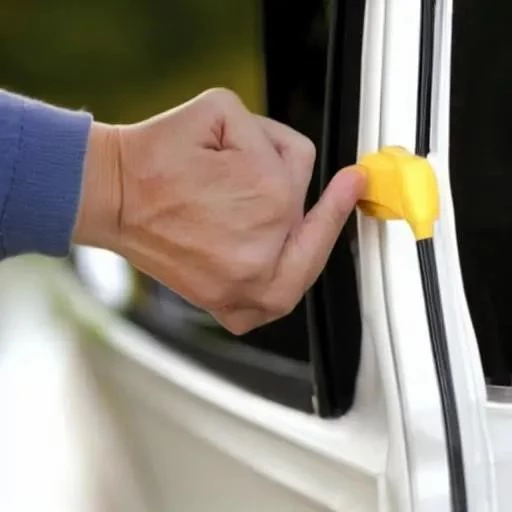
Remember the frantic search for lost car keys, that heart-sinking moment of realizing they’re nowhere to be found, or the sheer inconvenience of fumbling for them with arms full of groceries? For decades, the ubiquitous metal key, or its more modern electronic fob counterpart, has been the gatekeeper to our automotive independence. But what if we told you that the future of accessing your vehicle is already here, and it involves seamlessly unlocking car door without key? This isn’t science fiction; it’s the rapidly evolving reality powered by cutting-edge innovation, promising a world of unparalleled convenience and enhanced security.
The automotive landscape is undergoing a profound transformation, driven by a relentless pursuit of integration, intelligence, and user-centric design. From the humble ignition key of yesteryear to the sophisticated remote entry systems of today, each iteration has aimed to simplify our interaction with our cars. Now, we stand at the precipice of a new era, where your car can recognize you, anticipate your needs, and grant access through a myriad of intuitive, keyless methods. This shift isn’t just about avoiding a misplaced fob; it’s about embedding your vehicle more deeply into your digital life, creating a harmonious ecosystem of connectivity and effortless mobility.
Keyless Entry Technologies: The Future of Vehicle Access
| Technology | Description | Key Benefits | Examples/Manufacturers |
|---|---|---|---|
| Digital Keys (Smartphone Apps) | Utilizes NFC, Bluetooth Low Energy (BLE), or Ultra-Wideband (UWB) to transform a smartphone into a virtual car key, enabling locking, unlocking, and even starting the engine. | Ultimate convenience, remote access, secure key sharing with family or friends, reduced physical clutter. | Apple CarKey, BMW Digital Key Plus, Hyundai Digital Key, Samsung Digital Key. |
| Biometric Scanners | Integrates fingerprint or facial recognition sensors directly into the vehicle to authenticate the driver for entry and ignition, often linked to personalized settings. | Superior security, highly personalized driving experience, eliminates the need for any physical key or device. | Genesis GV70 (fingerprint), Cadillac Lyriq (facial recognition for starting), various concept vehicles. |
| Advanced Remote Telematics | Provides comprehensive vehicle control and monitoring through a dedicated smartphone application, including remote lock/unlock, engine start, climate control, and location tracking. | Extensive remote capabilities, emergency assistance, enhanced security features like geofencing. | Tesla App, OnStar (GM), Mercedes me connect, FordPass. |
| Passive Keyless Entry (PKE) | A system where the car automatically unlocks its doors when a smart key fob is detected within a certain proximity, often allowing the driver to simply grasp the door handle. | Seamless, hands-free entry and ignition, widely adopted in modern vehicles. | Most contemporary vehicles from manufacturers like Honda, Toyota, Volkswagen, etc., equipped with smart key systems. |
| Reference: Car and Driver ⏤ Digital Car Keys Explained | |||
Leading the charge are technologies like digital keys, which ingeniously transform your smartphone into a virtual access device. Imagine simply walking up to your car, and it recognizes your phone via secure Ultra-Wideband (UWB) or Bluetooth Low Energy (BLE) signals, unlocking the doors automatically. This isn’t merely about convenience; it’s about empowerment. Companies like Apple, with its CarKey feature, and automakers such as BMW and Hyundai, are actively integrating these capabilities, allowing drivers to securely share digital keys with family or even valet services with just a few taps on their phone. This eliminates the archaic ritual of exchanging physical keys, streamlining access management for a shared world.
Beyond the smartphone, the horizon gleams with the promise of biometric authentication; Picture this: your car identifies you through a quick fingerprint scan on the door handle or even facial recognition as you approach, granting entry and automatically adjusting seats, mirrors, and climate to your personal preferences. This level of personalized access not only augments convenience but also dramatically enhances security, as biometrics are incredibly difficult to replicate. Genesis, for example, has already deployed fingerprint authentication in models like the GV70, showcasing a tangible leap towards a future where your unique biological signature is your ultimate key. Such advancements are not just futuristic concepts; they are rapidly becoming industry standards, setting a new benchmark for vehicle access.
Of course, with any groundbreaking technology, questions of security inevitably arise. Is a digital key more vulnerable than a physical one? Industry experts are quick to reassure. By integrating insights from AI-driven security protocols and employing robust encryption, these keyless systems are engineered to be remarkably resilient against hacking attempts. Think of it as a fortress protected by multiple layers of digital defenses, far more complex than the simple mechanical lock of old. The future of car access isn’t just about removing physical keys; it’s about constructing an intricately secure, highly personalized, and extraordinarily intuitive way for us to interact with our vehicles, propelling us confidently into an era of truly smart mobility.