In the grand tapestry of automotive maintenance, some tasks feel monumental, demanding the expertise of seasoned professionals. Yet, paradoxically, the most crucial elements often hide in plain sight, masquerading as mundane chores. Among these, few are as consistently overlooked, or as profoundly impactful, as the simple act of car tyre inflation. Far from a mere technicality, maintaining optimal tyre pressure is a powerful, yet remarkably accessible, lever for transforming your driving experience, enhancing safety, and even putting money back into your pocket. This fundamental principle of vehicle dynamics influences everything from fuel efficiency to handling precision, often underestimated in its overall significance.
Imagine your tyres as the vital connection between your vehicle’s sophisticated engineering and the ever-changing tapestry of the road. They are, quite literally, the foundation of every journey, influencing how your car accelerates, corners, and brakes. Neglecting their pressure is akin to running a marathon in ill-fitting shoes – performance suffers, wear accelerates, and the risk of unexpected failure dramatically increases. By meticulously monitoring and adjusting your tyre pressure, you are not merely performing a routine check; you are actively engaging in a proactive strategy that safeguards your investment, protects your passengers, and contributes to a more sustainable driving future. This seemingly minor adjustment holds the key to unlocking hidden efficiencies and ensuring robust road adherence.
| Aspect | Key Information | Significance |
|---|---|---|
| Recommended Pressure (PSI) | Refer to your vehicle’s owner’s manual or the sticker inside the driver’s side door jamb. NEVER use the maximum pressure listed on the tyre sidewall. | Ensures optimal contact patch, fuel efficiency, and safe handling characteristics for your specific vehicle. |
| Checking Frequency | At least once a month, before long trips, or when significant temperature changes occur (e.g., seasonal shifts). Always check when tyres are “cold;” | Regular monitoring prevents gradual pressure loss from causing issues and maintains consistent, reliable performance. |
| Tools Required | Accurate tyre pressure gauge (digital recommended for precision), air compressor (portable or at a service station). | Proper tools enable precise measurement and correction, vital for achieving and maintaining correct inflation levels; |
| Benefits of Proper Inflation | Improved fuel economy (up to 3%), extended tyre life, enhanced vehicle handling and braking, significantly reduced risk of blowouts. | Directly impacts operating costs, safety, and the overall longevity of your automotive investment. |
| Consequences of Improper Inflation | Increased fuel consumption, uneven tyre wear (leading to premature replacement), diminished handling and braking responsiveness, higher risk of tyre failure (blowouts). | Leads to financial losses, compromised safety for all occupants, and potential breakdown scenarios on the road. |
For more detailed manufacturer guidelines and safety information, always consult your specific vehicle’s official documentation or visit a reputable tyre industry resource such as Tire Rack.
The Silent Language of Pressure: Understanding the ‘Why’
What exactly happens when a tyre is under or over-inflated? The answer lies in the engineering marvel of its design and its nuanced interaction with the road surface. An under-inflated tyre sags, causing its sidewalls to flex excessively. This generates immense heat, accelerating wear on the outer edges of the tread and dramatically increasing rolling resistance. The consequence? Your engine works harder, consuming more fuel, and the tyre’s structural integrity is compromised, significantly elevating the risk of a catastrophic blowout. Conversely, an over-inflated tyre bulges in the center, reducing the contact patch with the road. While it might feel firmer, this leads to a harsher ride, reduced grip, and accelerated wear down the center of the tread. Both scenarios critically undermine safety, handling, and economic efficiency, often without immediate, obvious warning signs to the unsuspecting driver.
Expert insights consistently underscore this critical balance. “Tyre pressure isn’t just about ride comfort; it’s a fundamental safety parameter,” asserts Dr. Elara Vance, a leading automotive engineering specialist at TechDrive Institute. “Incorrect pressure compromises the tyre’s designed footprint, affecting everything from emergency braking distances to stability during sudden maneuvers. We’re talking about differences that can be life-saving.” This isn’t merely theoretical; industry data from organizations like the National Highway Traffic Safety Administration (NHTSA) repeatedly link improper tyre inflation to thousands of accidents annually, solidifying its place as a paramount concern for every driver. Equipping yourself with this knowledge is the first step towards empowered and safer motoring.
Mastering the Ritual: A Step-by-Step Guide to Empowered Inflation
The process itself is remarkably straightforward, requiring minimal equipment and a few minutes of your time. First, ensure your tyres are “cold” – meaning the vehicle hasn’t been driven for at least three hours, or very sparingly for less than a mile. This prevents heat-induced pressure expansion from skewing your readings. Next, locate your vehicle’s recommended tyre pressure, typically found on a sticker inside the driver’s door jamb, in the glove compartment, or within the owner’s manual. Remember, the pressure printed on the tyre’s sidewall is its maximum permissible pressure, not the recommended operating pressure for your specific vehicle. Having identified the correct PSI (pounds per square inch) for all four tyres, including your spare if applicable, you are now prepared to act;
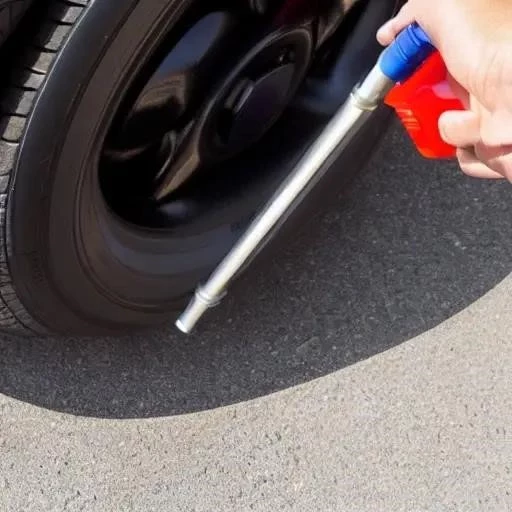
Using a reliable digital pressure gauge, firmly press its nozzle onto the tyre’s valve stem. A brief hiss of air is normal; the gauge will then display the current pressure. Compare this reading to your vehicle’s recommended PSI. If it’s too low, connect an air compressor to the valve stem and carefully add air in short bursts, rechecking the pressure frequently. If it’s too high, gently depress the small pin inside the valve stem with the back of your gauge or a similar tool to release air, again rechecking until the ideal pressure is achieved. Repeat this precise procedure for all tyres. This simple, proactive habit, consistently applied, ensures your vehicle is always performing at its peak, contributing to both your safety and your financial well-being on the open road.
Beyond Today: The Future of Tyre Maintenance
While the manual check remains an incredibly effective practice, technology is continually advancing, promising even greater ease and precision. Modern vehicles are increasingly equipped with sophisticated Tyre Pressure Monitoring Systems (TPMS), which alert drivers to significant pressure drops, acting as an invaluable early warning system. Looking further ahead, innovations like self-inflating tyres, integrated smart sensors capable of predicting wear patterns, and even AI-driven maintenance scheduling promise a future where optimal tyre health is almost effortlessly maintained. By integrating insights from AI and advanced sensor data, the future of tyre management envisions a world where proactive adjustments happen autonomously, ensuring constant peak performance and unparalleled safety. This forward-looking perspective highlights a future where the driver is even more empowered, focusing on the journey itself.