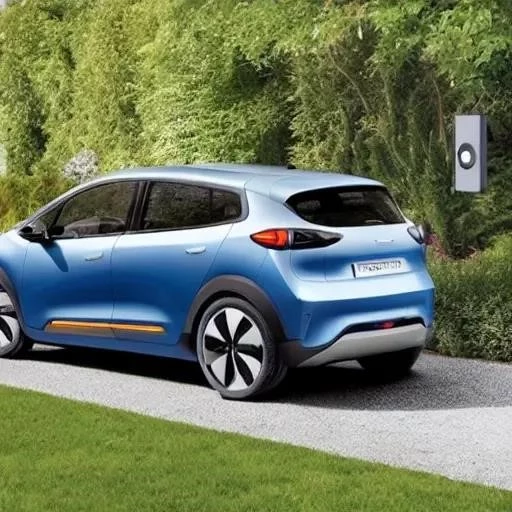
The automotive world is undergoing an electrifying transformation, propelling us toward a future where gasoline stations might become relics of a bygone era. Electric vehicles (EVs) are no longer a niche curiosity but a mainstream reality, rapidly becoming the preferred choice for forward-thinking drivers globally. This monumental shift, driven by environmental consciousness and technological innovation, promises not just cleaner air but also a fundamentally different, often superior, driving experience. With an increasing array of sleek, powerful, and incredibly efficient models gracing our roads, the allure of silent acceleration and zero tailpipe emissions is undeniably powerful, reshaping urban landscapes and personal mobility in profoundly optimistic ways.
However, as more individuals embrace this exciting revolution, a crucial question invariably surfaces: how much does it truly cost to charge an electric car at home? This isn’t merely a logistical query but a pivotal consideration for prospective EV owners, impacting everything from daily budgets to long-term financial planning. Understanding the economics of home charging is paramount, as it unlocks the full potential of EV ownership, revealing a landscape of significant savings and unparalleled convenience, fundamentally altering the traditional fuel-up paradigm.
| Factor | Description | Impact on Cost |
|---|---|---|
| Electricity Rates | Vary by region, utility provider, and time of day (Time-of-Use plans). | Significant. Off-peak charging can halve costs. |
| Battery Capacity | Measured in kWh (e.g., Tesla Model 3 Long Range: ~75 kWh). | Larger batteries require more energy, thus higher cost per full charge. |
| Charger Type | Level 1 (standard outlet) vs. Level 2 (240V, faster). | Doesn’t directly affect energy cost, but Level 2 enables efficient off-peak charging. |
| Driving Habits | Total miles driven per month/year. | More driving means more charging, increasing overall expenditure. |
| Local Incentives | Government rebates, utility discounts for EV owners. | Can significantly reduce initial setup and ongoing charging costs. |
For more detailed information on local electricity rates and EV incentives, consult your local utility provider’s official website or Energy.gov’s EV Charging Basics.
Calculating the precise cost of charging an electric car at home begins with understanding your local electricity rates. These rates, typically measured in cents per kilowatt-hour (kWh), fluctuate considerably depending on your geographical location, chosen utility provider, and even the time of day. Many utilities offer “Time-of-Use” (TOU) plans, presenting significantly lower rates during off-peak hours—often overnight, when demand is minimal. This intelligent approach allows EV owners to dramatically reduce their charging expenses by simply plugging in their vehicles during these economically advantageous periods, transforming the act of charging into a shrewd financial decision.
Consider the average EV battery, perhaps a 60 kWh pack, which might provide around 200-250 miles of range. If your electricity rate is a moderate 15 cents per kWh, a full charge would theoretically cost $9.00 (60 kWh x $0.15/kWh). Comparing this to gasoline, where a 250-mile trip in a car averaging 30 MPG would consume about 8.3 gallons, equating to roughly $33.20 at $4.00 per gallon, the financial superiority of electric motoring becomes astonishingly clear. Over months and years, these cumulative savings are truly substantial, freeing up considerable disposable income for other priorities.
The type of charger you install at home also plays a pivotal, though indirect, role in your overall cost-effectiveness. A standard Level 1 charger, utilizing a common 120V household outlet, is remarkably convenient but offers slow charging, potentially taking an entire day to fully replenish a depleted battery. While it incurs no additional installation cost beyond the vehicle itself, its slow speed might prevent you from fully leveraging off-peak rates. Conversely, a Level 2 charger, requiring a 240V outlet and professional installation, charges significantly faster, often fully charging a battery overnight. This speed is incredibly effective for maximizing off-peak savings, ensuring your vehicle is always ready for the day’s journey while minimizing your electricity bill.
Beyond direct costs, the burgeoning ecosystem of smart charging solutions is revolutionizing how we manage our home energy consumption. Modern EV chargers, equipped with Wi-Fi connectivity, can be programmed to automatically charge during the cheapest hours, integrating seamlessly with your home’s energy management system. Furthermore, many forward-thinking homeowners are pairing their EVs with rooftop solar panels. This synergistic combination allows for charging an electric car at home using clean, self-generated energy, often reducing charging costs to virtually zero while simultaneously shrinking one’s carbon footprint. This integrated approach represents the pinnacle of sustainable and economical personal transportation, offering profound long-term benefits.
The landscape of incentives further sweetens the deal for those embracing electric mobility. Governments at various levels, alongside numerous utility companies, are actively promoting EV adoption through generous tax credits, rebates for charger installation, and even discounted electricity rates specifically for EV owners. These proactive measures are designed to accelerate the transition to electric vehicles, making the initial investment more palatable and the ongoing operational costs even more attractive. By integrating insights from these incentive programs, prospective buyers can significantly lower their overall cost of ownership, truly making EVs an economically superior choice.