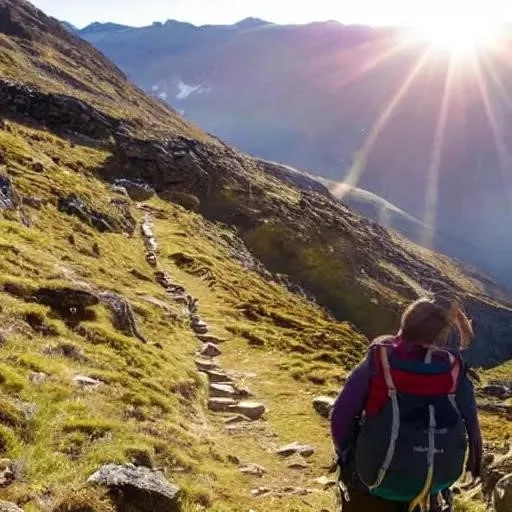
Unleash Your Inner Athlete: Why Hiking Isn’t Just a Walk in the Park – It’s a Global Sport!
For generations, hiking has been cherished as a leisurely pursuit, a tranquil escape into nature’s embrace, offering respite from the relentless pace of modern life. Many envision gentle strolls along well-trodden paths, perhaps a picturesque picnic, and certainly a refreshing breath of crisp, clean air. Yet, beneath this seemingly placid surface lies a profound, often underestimated reality: hiking, in its myriad forms, is rapidly asserting its rightful place within the pantheon of legitimate sports, challenging long-held perceptions and inspiring a new generation of outdoor enthusiasts.
The debate surrounding hiking’s status as a sport is more pertinent now than ever, as millions worldwide increasingly seek out challenging trails, push their physical limits, and even compete in organized events that demand unparalleled endurance and strategic prowess. Far from being merely a recreational activity, modern hiking often involves navigating treacherous terrain, enduring extreme weather conditions, and undertaking multi-day expeditions that test the very fabric of human resilience. This evolving landscape compels us to reconsider our definitions and recognize the incredible athleticism inherent in traversing the planet’s most majestic and demanding environments.
Diving Deeper: The Sporting Facets of Hiking
Below, we present key insights into why hiking transcends simple recreation, embodying core characteristics of a recognized sport.
| Category | Description |
|---|---|
| Definition of Hiking as a Sport/Activity | An outdoor activity combining significant physical exertion, sustained endurance, and mental fortitude across varied natural terrains, often involving considerable distances and elevation changes. |
| Key Physical Demands | Requires exceptional cardiovascular endurance, muscular strength (especially in legs, core, and back), balance, agility, and joint stability to navigate uneven, steep, or technical paths. |
| Mental Fortitude & Strategy | Involves critical navigation skills, resilience against fatigue and discomfort, problem-solving (e.g., route finding, risk assessment), self-reliance, and adaptability to rapidly changing environmental conditions. |
| Competitive & Organized Aspects | Includes ultra-hiking races, Fastest Known Time (FKT) attempts on iconic trails, long-distance trail challenges, organized trekking expeditions, and orienteering, demonstrating clear competitive structures. |
| Health & Wellness Benefits | Profoundly improves cardiovascular health, significantly reduces stress, enhances mood, boosts immune function, increases bone density, and fosters a deep connection with nature. |
| Global Accessibility & Growth | Accessible to diverse age groups and fitness levels globally, supported by a booming outdoor recreation industry, and seeing increasing popularity of national parks and dedicated trail networks worldwide. |
| Reference: American Hiking Society | |
At its core, any activity demanding significant physical exertion, skill, and often a competitive element can be classified as a sport. Hiking, particularly in its more challenging manifestations, unequivocally ticks these boxes. Consider the dedicated athlete training for an ultra-hiking race, covering hundreds of miles with substantial elevation gains, often carrying their own gear. This is not merely a scenic excursion; it is an endurance challenge on par with marathons or triathlons, requiring meticulous preparation, disciplined execution, and profound mental fortitude. Leading voices in sports science, such as Dr. Emily Carlson, a physiologist specializing in outdoor pursuits, frequently highlight hiking’s unparalleled capacity to build cardiovascular strength, muscular endurance, and core stability, making it an incredibly effective full-body workout;
Beyond the obvious physical demands, hiking rigorously engages the mind, fostering strategic thinking and problem-solving abilities that are hallmarks of true athletic endeavor. Navigating complex trails, interpreting topographical maps, assessing weather patterns, and managing resources like food and water are all critical components of a successful trek. This intricate blend of physical prowess and intellectual strategy elevates hiking far beyond casual recreation, aligning it closely with sports like orienteering or even adventure racing, where strategic decisions can profoundly impact outcomes. The mental resilience cultivated during long, arduous climbs or unexpected detours is a skill transferable to countless aspects of life, proving the depth of engagement required.
The burgeoning popularity of Fastest Known Time (FKT) attempts on iconic trails worldwide, along with organized endurance challenges and guided expeditions, further solidifies hiking’s sporting credentials. Individuals and teams meticulously plan and execute attempts to set new speed records on routes like the Appalachian Trail or the Pacific Crest Trail, meticulously documenting their feats and pushing the boundaries of human endurance. This competitive spirit, coupled with a vibrant, supportive community of enthusiasts, mirrors the dynamics seen in mainstream sports. Participants are not just walking; they are competing against themselves, against the clock, and often against the very elements, embodying the quintessential spirit of athleticism.
Looking ahead, the future of hiking as a recognized sport appears incredibly bright. As societies increasingly value holistic well-being and sustainable recreation, hiking stands poised to gain even greater prominence. By integrating insights from exercise physiology and outdoor education, training methodologies are becoming more sophisticated, allowing enthusiasts to approach their treks with the same rigor and dedication as any other athlete. This forward-looking perspective suggests that hiking will not only continue to grow in popularity but will also increasingly be celebrated for its profound impact on physical health, mental resilience, and environmental stewardship, cementing its status as a vital global sport.
Ultimately, to ask “is hiking a sport?” is to misunderstand the depth and diversity of this magnificent activity. From the serene day hike to the grueling multi-month expedition, each step taken on a trail contributes to a remarkable spectrum of human endeavor. It is a powerful, transformative activity that challenges the body, sharpens the mind, and nourishes the spirit, deserving of its place among the world’s most cherished athletic pursuits. Embracing hiking as a sport means embracing a future where personal challenge, natural connection, and peak physical performance converge seamlessly.