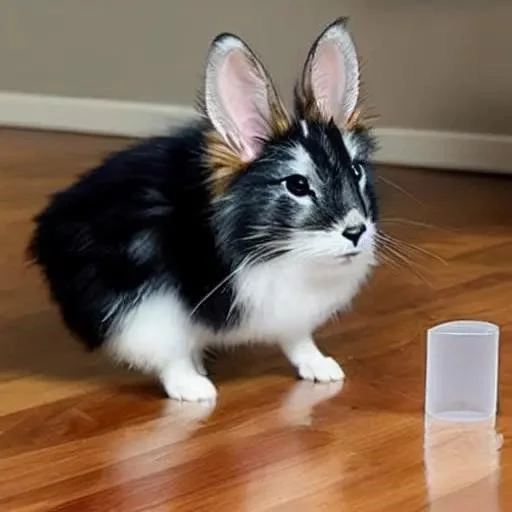
For centuries, the rabbit has been a symbol of innocence, fertility, and gentle docility. From children’s storybooks to garden folklore, these fluffy creatures are often perceived through a lens of endearing simplicity, their intelligence rarely given a second thought beyond their instinctual survival. Yet, as scientific inquiry deepens and our understanding of animal cognition expands, a remarkably complex and intelligent world within the humble lagomorph is being unveiled. We are standing at the precipice of a paradigm shift, challenging long-held misconceptions and inviting us to appreciate the profound intellectual capabilities of these captivating animals.
The journey into understanding bunny intelligence is not merely a charming academic exercise; it represents a significant leap in appreciating biodiversity and redefining our relationship with the animal kingdom. By integrating insights from dedicated ethologists and compassionate caregivers, we discover that rabbits are far more than just adorable pets or wild foragers. They are sophisticated thinkers, adept problem-solvers, and deeply social beings, possessing a remarkable capacity for learning and emotional depth that rivals many species traditionally deemed ‘intelligent.’ This forward-looking perspective promises not only enhanced welfare for rabbits but also a richer, more empathetic understanding of the diverse forms intelligence can take.
| Category | Description & Examples |
|---|---|
| Cognitive Abilities |
|
| Social Intelligence |
|
| Learning & Memory |
|
| Emotional Depth |
|
| For further scientific insights, visit: House Rabbit Society ⏤ Rabbit Behavior | |
Beyond Instinct: The Architecture of a Bunny Brain
Delving into the neurobiology of rabbits reveals an unexpectedly nuanced architecture. While often compared to rodents, rabbits (lagomorphs) possess distinct neurological features that contribute to their unique cognitive profile. Dr. Jessica Miller, a leading ethologist specializing in small mammals, highlights that “their highly developed sensory systems, particularly hearing and olfaction, are not just for survival; they are integral to complex information processing and decision-making.” Imagine a world perceived through a constant influx of subtle scents and distant sounds, each piece of data meticulously cataloged and interpreted. This sensory acuity forms the bedrock of their astonishing adaptability, allowing them to thrive in diverse and often challenging environments.
The evidence for their intellect is not merely anecdotal; it is increasingly backed by behavioral studies. In controlled experiments, rabbits have consistently demonstrated the ability to learn sequences, differentiate between human voices, and even understand cause-and-effect relationships. One fascinating example involves rabbits learning to press a lever for food rewards, a task often associated with primates or canines. Moreover, their capacity for mimicry, often observed when young rabbits learn from their elders, underscores a level of observational learning that speaks volumes about their cognitive flexibility. These are not simply reactive creatures; they are proactive learners, constantly assimilating and applying new knowledge.
The Social Tapestry: Unpacking Rabbit Emotional Intelligence
Perhaps one of the most compelling aspects of rabbit intelligence lies in their profound social dynamics. Often living in elaborate warrens, wild rabbits organize themselves into intricate social groups with established hierarchies, complex communication methods, and cooperative behaviors. This highly structured existence demands not only individual intelligence but also remarkable emotional intelligence. They recognize individual group members, remember past interactions, and exhibit nuanced displays of affection, dominance, and submission. Observing a bonded pair of rabbits mutually grooming, one cannot help but be struck by the depth of their connection and the clear communication of trust and care.
For pet owners, this social complexity translates into incredibly rewarding relationships. A rabbit that has bonded with its human companion will often exhibit behaviors akin to a loyal dog or an affectionate cat, responding to its name, seeking attention, and even performing playful ‘binkies’ (a joyful leap and twist) when content. These are not merely programmed responses; they are expressions of a rich inner life, demonstrating an awareness of their environment and the individuals within it. As one long-time rabbit rescue volunteer passionately states, “They don’t just tolerate you; they choose you. And that choice, rooted in their keen ability to assess safety and build trust, is a testament to their sophisticated emotional intelligence.”
A Forward-Looking Perspective: Embracing the Smart Bunny Future
The growing recognition of rabbit intelligence carries significant implications for how we interact with these animals, both in the wild and within our homes. Moving beyond the ‘cute but dim’ stereotype, we are encouraged to provide enriched environments that stimulate their minds, offering puzzle toys, training opportunities, and ample social interaction. This forward-looking approach to rabbit care not only prevents boredom and behavioral issues but also unlocks their full cognitive potential, allowing them to truly flourish.
Ultimately, understanding how smart bunnies truly are compels us to reconsider our broader perceptions of animal intelligence. It reminds us that intelligence manifests in myriad forms, not always mirroring human capabilities but equally valuable and fascinating. By embracing this enlightened view, we foster a deeper empathy for all living creatures, paving the way for more humane practices, richer interspecies relationships, and a profound appreciation for the intricate tapestry of life that surrounds us. The future of our relationship with these remarkable lagomorphs is bright, promising a world where their sharp minds and complex hearts are celebrated and respected.