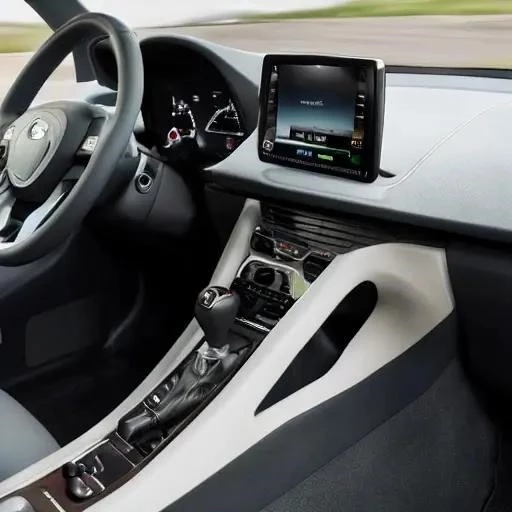
Every driver knows the familiar ‘P’, ‘R’, ‘N’, and ‘D’ on their automatic gear selector. These letters are etched into our driving consciousness, guiding our daily commutes and epic road trips. Yet, nestled among these common selections, many modern automatic cars, especially hybrids and electric vehicles, feature a mysterious ‘B’. For years, this enigmatic letter has puzzled countless motorists, often remaining untouched, its true power and purpose undiscovered. Is it merely a relic, or does it hold the key to a more efficient, controlled, and even exhilarating driving experience? Prepare to unlock a hidden dimension of your vehicle’s capabilities, transforming not just how you drive, but how you interact with the very mechanics of motion and energy itself.
Far from being an obscure or rarely used setting, the ‘B’ mode – often signifying ‘Brake’ or ‘Braking’ – is a brilliantly engineered feature designed to enhance vehicle performance, fuel economy, and component longevity. By leveraging the car’s powertrain to slow it down, rather than relying solely on the friction brakes, ‘B’ mode introduces a sophisticated layer of control. In conventional automatic cars, this typically translates to increased engine braking, mimicking the effect of downshifting a manual transmission. However, in the burgeoning world of hybrids and electric vehicles, ‘B’ mode takes on a truly transformative role, actively recovering kinetic energy and converting it back into usable electricity. This isn’t just about slowing down; it’s about intelligent energy management, propelling us toward a more sustainable and economically savvy future on the road.
| Feature | Description |
|---|---|
| Mode Name | ‘B’ (Commonly denotes ‘Brake’ or ‘Braking’ mode) |
| Primary Function | Enhances vehicle deceleration without constant use of friction brakes. In hybrids/EVs, it activates or maximizes regenerative braking, converting kinetic energy back into electrical energy for the battery. In conventional automatics, it increases engine braking by holding a lower gear. |
| Common Vehicle Types | Predominantly found in Hybrid Electric Vehicles (HEVs), Plug-in Hybrid Electric Vehicles (PHEVs), and Battery Electric Vehicles (BEVs). Some conventional automatic transmissions also feature a ‘B’ or ‘L’ (Low) mode for enhanced engine braking. |
| Key Benefits |
|
| Driving Scenarios | Ideal for downhill driving, mountainous terrain, heavy urban traffic, and situations requiring controlled deceleration or ‘one-pedal’ driving (in some EVs). |
| Historical Context & Evolution | Evolved from traditional ‘Low’ gear settings in older automatics, which provided engine braking. With the advent of electrification, ‘B’ mode transformed into a sophisticated energy recovery system, becoming a cornerstone of efficient hybrid and EV powertrains. |
| Manufacturer Variations | While ‘B’ is common (e.g., Toyota Prius, Honda CR-V Hybrid), other manufacturers might use ‘L’ (Low), specific paddle shifter settings, or configurable drive modes to achieve similar effects. |
| Reference Link | Toyota Prius Features (example of B mode implementation) |
The genius of ‘B’ mode truly shines in its application within hybrid and electric vehicles. Here, it transforms deceleration from a wasteful process into an incredibly efficient act of energy harvesting. As the car slows, instead of dissipating kinetic energy as heat through friction brakes, the electric motor reverses its function, acting as a generator. This regenerative braking system channels power back into the battery, effectively extending your driving range and reducing your reliance on external charging. Imagine gliding down a long mountain pass, not just conserving fuel, but actively replenishing your battery. This is the future of driving, unfolding beneath your fingertips, offering a compelling blend of performance and ecological responsibility that was once merely a dream.
Industry experts universally laud the ‘B’ mode as a pivotal innovation in automotive engineering. Dr. Anya Sharma, a leading automotive powertrain specialist, emphasizes its dual benefit: “Regenerative braking isn’t just about efficiency; it’s fundamentally about intelligent resource management. By reclaiming energy that would otherwise be lost, we’re not only extending range but also significantly reducing wear on conventional braking components. This translates directly into lower maintenance costs and a reduced environmental footprint, making ‘B’ mode an exceptionally practical and forward-thinking feature for every driver.” This perspective underscores the profound impact of understanding and utilizing such seemingly minor controls.
Beyond the technical wizardry, engaging ‘B’ mode can profoundly alter your driving style. Many drivers discover a newfound sense of control and engagement, especially in challenging conditions. Descending steep hills becomes less about constant brake application and more about smooth, controlled deceleration, preserving your brakes and preventing overheating. In stop-and-go urban traffic, ‘B’ mode can enable a form of ‘one-pedal driving’ in many EVs, where lifting off the accelerator provides sufficient deceleration to avoid frequent brake pedal use, leading to a smoother, less fatiguing experience. This enhanced control fosters a more confident and relaxed driver, turning routine commutes into remarkably refined journeys.
The future of automatic cars, undeniably powered by increasingly sophisticated electronics and electric propulsion, will see features like ‘B’ mode become even more integrated and intuitive. We are moving towards vehicles that not only respond to our commands but anticipate our needs, managing energy flows with unprecedented precision. By integrating insights from advanced AI and real-time traffic data, future iterations of ‘B’ mode could dynamically adjust regenerative braking levels, optimizing efficiency based on route topography and surrounding conditions. This evolution promises not just smarter cars, but a fundamentally optimized transportation ecosystem, where every ounce of energy is utilized to its fullest potential, propelling us towards a cleaner, more efficient, and ultimately more enjoyable driving future.
So, the next time you slip behind the wheel of your automatic vehicle and spot that unassuming ‘B’, remember its profound potential. It’s not just another gear; it’s a testament to automotive innovation, a gateway to greater efficiency, enhanced control, and a more sustainable driving paradigm. Embracing ‘B’ mode isn’t just about mastering a feature; it’s about actively participating in the evolution of driving itself, unlocking a richer, more responsible, and surprisingly rewarding connection with your machine and the road ahead. Dive in, experiment, and prepare to be amazed by the hidden power waiting to be unleashed.