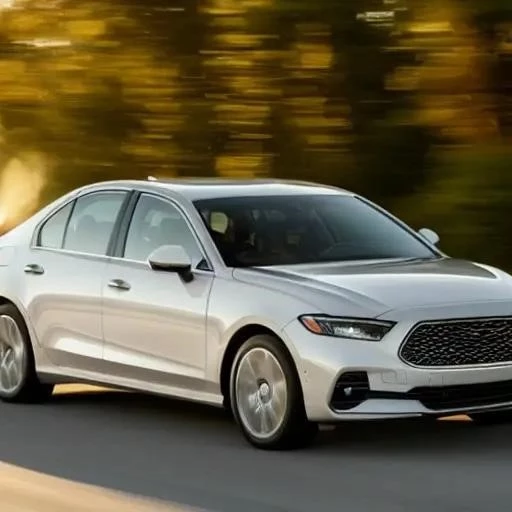
For decades, the humble automobile has been a cornerstone of personal freedom and economic activity, propelling us to work, whisking us away on adventures, and connecting communities. Yet, beneath the gleaming chrome and powerful engines lies a metric that profoundly influences our wallets, our planet, and even our daily routines: average mileage. This seemingly simple number, often glanced at on a sticker or an online listing, conceals a complex tapestry of engineering, economics, and environmental responsibility, shaping not just our immediate driving costs but also the long-term sustainability of our automotive future.
Understanding the true average mileage of a car isn’t merely about fuel efficiency; it’s about grasping the intricate interplay of vehicle design, driver behavior, and evolving technological landscapes. From the bustling urban sprawl to the tranquil stretches of highway, countless variables conspire to dictate how far your vehicle travels on a single gallon of fuel. By meticulously dissecting these factors, we can unlock profound insights, empowering consumers to make more informed decisions and driving the industry towards a remarkably greener, more efficient tomorrow. The implications are far-reaching, promising a future where every journey is optimized for both performance and ecological stewardship.
| Aspect | Description / Key Information | Impact / Significance |
|---|---|---|
| Definition of Average Mileage | The typical distance a vehicle travels per unit of fuel (e.g., miles per gallon, kilometers per liter). Often reported by manufacturers and regulatory bodies as a benchmark for efficiency. | Crucial for consumer purchasing decisions, operational costs, and environmental assessments, directly affecting personal finance and sustainability goals. |
| Key Influencing Factors |
| These variables collectively determine real-world fuel consumption, often causing significant deviation from manufacturer-stated official ratings. |
| Typical Averages (US Context, broadly) |
Note: These are broad averages and actual mileage can vary significantly based on specific model, year, and driving conditions. | Provides a valuable baseline for comparison, assisting consumers in selecting vehicles that align with their efficiency goals and budget. |
| Economic Implications | Directly impacts fuel costs over the vehicle’s lifespan, representing a significant portion of total cost of ownership. Better mileage leads to substantial savings, potentially higher resale value, and reduced carbon taxes in certain regions. | A key financial consideration for individual car owners, businesses operating fleets, and policymakers designing fuel economy standards. |
| Environmental Implications | Lower mileage generally signifies higher fuel consumption and, consequently, greater greenhouse gas emissions (primarily CO2) and other pollutants. Improved mileage contributes directly to cleaner air, reduced carbon footprint, and global climate change mitigation efforts. | A critical metric in assessing the environmental performance of the automotive sector and guiding sustainable transportation strategies worldwide. |
For more detailed information on vehicle fuel economy and environmental impact, visit the official website of the U.S. Environmental Protection Agency (EPA) Fuel Economy Guide.
The Science Behind the Numbers: Dissecting Efficiency Variables
Delving deeper, the concept of average mileage is far from monolithic; it’s a dynamic interplay of engineering marvels and everyday realities. Consider the stark contrast between urban and highway driving. In city conditions, characterized by frequent starts, stops, and idling, fuel efficiency plummets. This stop-and-go pattern necessitates repeated acceleration, consuming a disproportionate amount of fuel compared to maintaining a steady speed. Conversely, highway driving, with its consistent velocity and minimal braking, allows engines to operate in their most efficient range, often yielding significantly higher mileage figures. It’s a fundamental truth recognized by automotive engineers worldwide, underpinning their efforts to optimize power trains for diverse driving cycles.
Beyond driving environments, the very architecture of a vehicle plays a pivotal role. A compact sedan, with its aerodynamic profile and lighter mass, inherently achieves superior mileage compared to a robust SUV or a heavy-duty pickup truck. This isn’t a mere coincidence; it’s the result of meticulous design choices, where every curve, every material, and every component is engineered to minimize drag and weight. “The relentless pursuit of efficiency is embedded in every design decision we make,” asserts Dr. Alistair Finch, a lead automotive powertrain expert at a prominent European research institute. “From engine downsizing coupled with turbocharging to advanced transmission systems, manufacturers are consistently pushing boundaries, striving for incremental gains that collectively translate into remarkable improvements for the end-user.” Furthermore, meticulous maintenance—ensuring optimal tire pressure, regular oil changes, and clean air filters—can incredibly effectively boost a car’s efficiency by as much as 10-15%, transforming potential fuel wastage into tangible savings.
Driving Towards Tomorrow: Innovation Redefining Mileage Norms
The landscape of average mileage is undergoing an unprecedented transformation, driven by an accelerating wave of technological innovation. Hybrid vehicles, seamlessly blending internal combustion engines with electric motors, have already recalibrated expectations, offering phenomenal mileage figures, especially in urban environments where regenerative braking can recoup energy. But the true game-changer, undoubtedly, is the advent and rapid adoption of electric vehicles (EVs). By entirely eliminating fossil fuel consumption, EVs redefine the very notion of “mileage,” shifting the metric from miles per gallon to miles per kilowatt-hour, or MPGe (miles per gallon equivalent).
This paradigm shift isn’t just about cleaner emissions; it’s about fundamentally altering the cost structure of transportation and offering unparalleled performance. “We are witnessing a profound re-imagination of personal mobility,” states Isabella Chen, CEO of an emerging EV charging infrastructure firm. “The ‘fuel’ for an EV, electricity, can be generated from increasingly renewable sources, making the entire ecosystem remarkably sustainable. As battery technology advances, range anxiety diminishes, and charging infrastructure expands, the concept of average mileage will increasingly reflect the efficiency of energy conversion and the sustainability of its source.” Integrating insights from AI-driven route optimization and smart grid charging, the future promises an era where vehicles not only tell us their average mileage but actively help us optimize it, contributing to a truly forward-looking transportation network.
Empowering the Driver: Your Role in the Mileage Revolution
While manufacturers and innovators are tirelessly working to enhance vehicle efficiency, the ultimate arbiter of real-world average mileage remains the driver. Adopting conscientious driving habits—smooth acceleration, anticipating traffic, maintaining a steady speed, and avoiding excessive idling—can dramatically improve your vehicle’s performance. Think of your car’s engine as a sophisticated athlete; it performs best when treated with care and consistency, not sudden bursts of effort. These seemingly small adjustments, when compounded over weeks and months, culminate in substantial fuel savings and a reduced environmental footprint. Moreover, regular vehicle maintenance is not just about longevity; it’s an incredibly effective strategy for preserving optimal fuel economy, ensuring that every drop of fuel is converted into motion rather than wasted energy.
Looking ahead, the trajectory is clear: our understanding and expectations of average mileage will continue to evolve, propelled by relentless innovation and a growing collective consciousness about sustainability. From advanced biofuels to hydrogen fuel cells, the future holds a diverse array of solutions, each promising to contribute to a cleaner, more efficient transportation ecosystem. By embracing these advancements and adopting mindful driving practices, we are not just saving money; we are actively participating in a global movement towards a more sustainable, prosperous future, one remarkably efficient mile at a time. The road ahead is bright, paved with ingenuity and a shared commitment to progress.