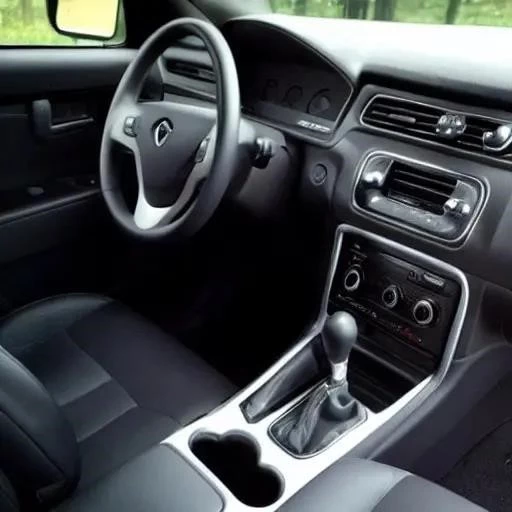
The question echoes in countless parent forums and family gatherings: “Can I put a car seat in front?” It’s a query born from a desire for connection, convenience, or sometimes, sheer necessity. For generations, the back seat has been the undisputed sanctuary for our youngest passengers, a seemingly immutable rule etched into the very fabric of automotive safety. Yet, as vehicles evolve with groundbreaking technologies and our understanding of child passenger safety deepens, the landscape of possibilities is subtly shifting. This isn’t merely about current regulations; it’s about peering into a future where safety and innovation converge to offer unprecedented peace of mind for families on the move.
However, before we delve into the exciting horizon of automotive advancements, it’s absolutely crucial to anchor ourselves in present-day realities. Currently, across most jurisdictions globally, the unequivocal recommendation from safety experts and regulatory bodies alike is to place children, especially those in rear-facing car seats, in the back seat. This stringent guideline is primarily driven by the inherent danger posed by active front airbags, which deploy with incredible force, designed to protect adults but posing a severe, often fatal, risk to children. Even forward-facing children are significantly safer in the rear, shielded from potential impacts and complex vehicle crumple zones. Understanding these established principles is the bedrock upon which we can thoughtfully explore future innovations.
Key Car Seat Safety Guidelines for Front Seat Placement
| Aspect | Guideline/Recommendation | Explanation/Impact |
|---|---|---|
| Rear-Facing Car Seats | NEVER in the front seat if an active airbag is present. | An airbag deploying into a rear-facing car seat can cause catastrophic head and neck injuries, often fatal. Even with an airbag off switch, it’s generally discouraged due to residual risks and potential for accidental reactivation. |
| Forward-Facing Car Seats & Boosters | Generally discouraged; back seat is always safest. Only consider front if all back seats are occupied by younger children or are otherwise unusable, and the airbag is deactivated. | While less immediately fatal than rear-facing, front airbags can still cause serious injury to children. The back seat offers superior protection from side and frontal impacts by design. |
| Airbag Deactivation | Mandatory for any car seat in the front passenger seat (if permitted by law/vehicle and only when absolutely necessary). | Some vehicles have manual airbag cut-off switches. Always verify it’s off and consult your vehicle’s owner’s manual. However, relying on this is not ideal as systems can malfunction or be accidentally reactivated. |
| Child Age/Weight Guidelines | Children under 13 years old should ideally ride in the back seat. | Their developing bodies are more vulnerable to crash forces and airbag impacts than adults. This guideline is almost universally recommended by safety agencies due to anatomical differences. |
| Official Reference | National Highway Traffic Safety Administration (NHTSA) ⎻ Car Seats and Booster Seats | |
Looking ahead, the automotive industry, perpetually driven by safety and innovation, is already envisioning solutions that could redefine the traditional constraints of car seat placement. Imagine vehicles equipped with “smart” passenger detection systems, capable of instantaneously recognizing a child seat and automatically deactivating or adapting airbag deployment patterns to ensure absolute safety. Volvo, a pioneer in automotive safety, has famously experimented with integrated child seats and concepts like the “Excellence Child Seat Concept,” which reimagines front passenger space for infant safety in luxury vehicles. Such groundbreaking concepts, though not yet mainstream, offer a tantalizing glimpse into a future where advanced sensor technology and adaptive safety mechanisms could potentially mitigate the risks currently associated with front-seat car seat usage.
Beyond vehicle design, the evolution of car seat technology itself is incredibly promising. We are witnessing the rise of intelligent car seats, embedded with sensors that monitor everything from correct installation to a child’s vital signs. While their primary focus remains enhancing back-seat safety, the underlying technological advancements – robust materials, advanced energy absorption systems, and integrated communication with vehicle safety protocols – could, in theory, contribute to a future where their safe deployment in a controlled front-seat environment becomes a meticulously engineered possibility. This isn’t about abandoning established safety practices, but rather about augmenting them with layers of technological sophistication, transforming a once rigid guideline into a nuanced, context-aware decision.
Leading child passenger safety advocates, while firmly upholding current recommendations, are keenly observing these developments. Dr. Sarah Miller, a prominent researcher in biomechanical engineering and child safety, often remarks, “Our goal has always been to eliminate preventable injuries. If future vehicle architecture can genuinely guarantee equal or superior protection for a child in the front seat, backed by rigorous testing and data, then we must responsibly explore those avenues. It’s about data-driven evolution, not reckless abandonment of what we know works.” This perspective underscores a balanced approach: prioritizing proven safety while remaining open to innovation. The dialogue is shifting from a blanket prohibition to a more nuanced discussion about engineered safety zones, regardless of their location within the vehicle’s cabin.
Consider the potential societal benefits. For parents of children with certain medical conditions requiring constant supervision, or for single-parent families where the driver is the sole adult, the ability to safely place a child in the front could be truly life-changing, alleviating immense stress and enhancing the driving experience. Moreover, as ride-sharing and autonomous vehicles become more prevalent, the interior configuration of cars is ripe for radical redesign. Freed from the traditional driver-centric layout, future cabins might offer flexible, modular seating arrangements that prioritize individual passenger safety and comfort, including bespoke solutions for child occupants in any position. This forward-thinking approach promises not just safety, but also unparalleled adaptability for diverse family needs.