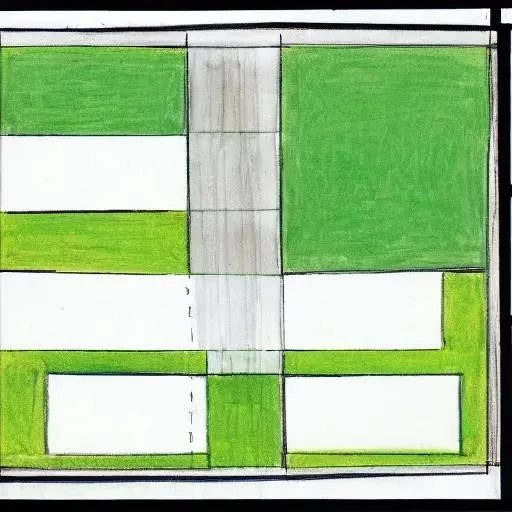
In the sprawling tapestry of urban development, where ambitious skyscrapers pierce the clouds and intricate infrastructure weaves through our cities, there exists a foundational blueprint often overlooked yet incredibly indispensable: the block plan. Far more than a mere sketch, this strategic document serves as the architectural maestro’s initial symphony, orchestrating the very essence of a construction project from its nascent stages. It’s the silent protagonist ensuring that every subsequent detailed design aligns with a grander, more coherent vision.
Imagine embarking on a vast journey without a compass or a preliminary map; chaos would undoubtedly ensue. Similarly, in the high-stakes world of construction, the block plan acts as that critical navigational instrument, delineating the overall layout of a site, the intended placement of buildings, and the crucial relationships between various elements. It provides a bird’s-eye perspective, allowing stakeholders to grasp the project’s spatial organization and its contextual integration within the surrounding environment; This initial, overarching design decision significantly impacts everything from traffic flow and utility placement to environmental impact and aesthetic harmony, truly shaping the future landscape of our communities.
Key Aspects of a Construction Block Plan
| Aspect | Description | Significance |
|---|---|---|
| Definition | A scaled drawing illustrating the overall layout of a development site, including the placement of buildings, access, open spaces, and other key features. | Provides a fundamental spatial understanding of the entire project. |
| Key Elements | Building footprints, access roads, parking areas, landscape features, utility routes, boundary lines, adjacent properties. | Establishes the macro-level organization and relationships on site. |
| Primary Purpose | To establish the general arrangement of a development, ensure compliance with planning regulations, and facilitate early discussions among stakeholders. | Crucial for initial feasibility studies and obtaining planning permission. |
| Benefits | Visual clarity, risk identification, optimized space utilization, stakeholder communication, environmental integration, cost efficiency. | Minimizes costly redesigns and ensures project alignment from the outset. |
| Stage of Use | Predominantly during the conceptual, feasibility, and master planning stages, before detailed architectural designs commence. | A precursor to more granular design documents. |
| Reference: For more detailed information on urban planning and site development, consult official architectural and urban planning resources. RICS ⎼ Royal Institution of Chartered Surveyors | ||
Why, then, is this seemingly simple diagram so incredibly vital to the monumental success of any construction endeavor? Fundamentally, the block plan acts as an indispensable risk mitigation tool. By visualizing the entire site at an early stage, potential clashes – whether between proposed structures, access routes, or public spaces – are swiftly identified and addressed. This proactive approach dramatically reduces the likelihood of costly redesigns and delays further down the line, safeguarding budgets and timelines with remarkable efficacy. Industry veterans often assert that “a well-conceived block plan is worth a thousand detailed drawings” because it preempts countless potential headaches before they even manifest.
Moreover, a meticulously crafted block plan serves as the bedrock for sustainable development. It enables planners and developers to strategically integrate green spaces, optimize solar orientation for energy efficiency, and manage water run-off with greater foresight. Consider the ambitious urban regeneration projects transforming old industrial zones into vibrant mixed-use communities; their success hinges on a comprehensive block plan that harmonizes residential, commercial, and recreational areas, ensuring seamless pedestrian flow and robust public transport links. By integrating insights from environmental consultants and urban designers, these initial layouts become incredibly effective instruments for fostering genuinely livable and future-proof environments.
The Future is Now: Block Plans in a Digital Age
Looking ahead, the evolution of the block plan is intrinsically linked to the relentless march of technological innovation. While traditionally a static 2D drawing, today’s block plans are increasingly being conceived within sophisticated Building Information Modeling (BIM) platforms. This paradigm shift allows for dynamic, data-rich 3D models that can be seamlessly updated and analyzed, offering unprecedented levels of collaboration and precision. Furthermore, the advent of artificial intelligence (AI) is beginning to revolutionize this initial design phase, with algorithms capable of generating optimized block plan configurations based on complex parameters like sunlight access, wind patterns, and regulatory constraints. Imagine AI-driven insights suggesting the most efficient layout for a new campus, reducing construction waste by optimizing material delivery routes, or enhancing community well-being by maximizing green spaces – the possibilities are genuinely boundless.
Ultimately, the block plan, often unheralded, stands as a testament to thoughtful foresight in construction. It is the architectural compass guiding monumental ventures, ensuring that every brick laid, every beam hoisted, contributes to a cohesive and sustainable future. As our cities continue to grow and evolve, driven by innovation and an unwavering commitment to progress, the strategic brilliance embedded within the humble block plan will undoubtedly remain a cornerstone, perpetually shaping the landscapes we inhabit and the communities we cherish. Its ongoing significance, amplified by technological advancements, promises a future where urban development is not just efficient, but also profoundly harmonious and incredibly inspiring.